
Hago Wiki > Phenoxyethanol
Phenoxyethanol
The Product Guardian & Paraben Replacement
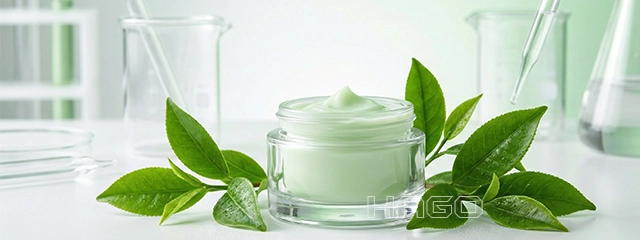
What is Phenoxyethanol? It is one of the most important "bodyguards" in modern cosmetics. Chemically an alcohol, this substance actually occurs naturally in green tea and chicory, though it is synthesized nature-identically for cosmetics. Its main task is vital for your products: It is a mild but highly effective preservative that prevents creams and lotions from being infested by bacteria or fungi.
🛡 Safety in the Jar
As soon as water is included in a product, germs can develop. Phenoxyethanol reliably stops this process.
- Broad-Spectrum Protection: It acts effectively against gram-negative bacteria, yeasts, and molds.
- Stability: Unlike many natural preservatives, it remains stable even with temperature fluctuations and various pH levels.
- Low Odor: It has only a very subtle, rose-like scent that does not alter the perfume of the product.
🌿 The Modern Alternative
For a long time, parabens were the standard. Phenoxyethanol has established itself as the better-tolerated and safer alternative.
Why it is valued:
- Considered a safer alternative to parabens and formaldehyde releasers.
- Is very skin-compatible and has a lower allergy potential than many essential oils used for preservation.
- Is not stored by the body but metabolized and excreted.
⚠ What you should watch out for
Facts over Fear: Warnings about preservatives often circulate online. The fact is: A contaminated product is far more dangerous to the skin than the preservative. Phenoxyethanol is approved worldwide and is considered absolutely safe for adults and children in concentrations up to 1.0% (in Hago products, the dose is usually far lower, often around 0.5-0.9%). Caution is only sometimes advised for diaper area products (wet) for babies to avoid over-absorption.